If you've searched "what to include in a freelance contract," you're probably about to send a proposal and you don't want to leave anything important out. The good news: a working freelance contract only needs to answer five questions clearly. Here's each one, in the order they should appear.
1. Scope of work
Describe exactly what you're delivering — file types, page counts, number of design concepts, whatever applies to your work. Vague scope ("a website") invites "just one more page" requests later. Specific scope ("a 5-page responsive website with one homepage design and two rounds of feedback") gives you something to point back to.
2. Payment terms
Include your rate, whether it's flat-fee or hourly, a due date for invoices (14 days is common), a late fee if payment slips past that date, and any upfront deposit. This is the clause clients read most closely, so keep it specific and easy to find.
3. Revision limits
Set a number. "Two rounds of revisions included, additional rounds billed at $X/hour" is enforceable. "A few tweaks are fine" is not — and it's the fastest way a fixed-price project quietly turns into unpaid extra work.
4. Ownership and usage rights
State clearly when the finished work becomes the client's property — usually on receipt of final payment, not on delivery of the files. This single line gives clients a real incentive to pay promptly, since they don't get full rights to use the work until they do.
5. Cancellation terms
Explain what happens if the project ends early: whether the deposit is refundable, whether you're paid for work completed so far, and how much notice either side owes the other. Without this clause, freelancers are often left doing partial work for free.
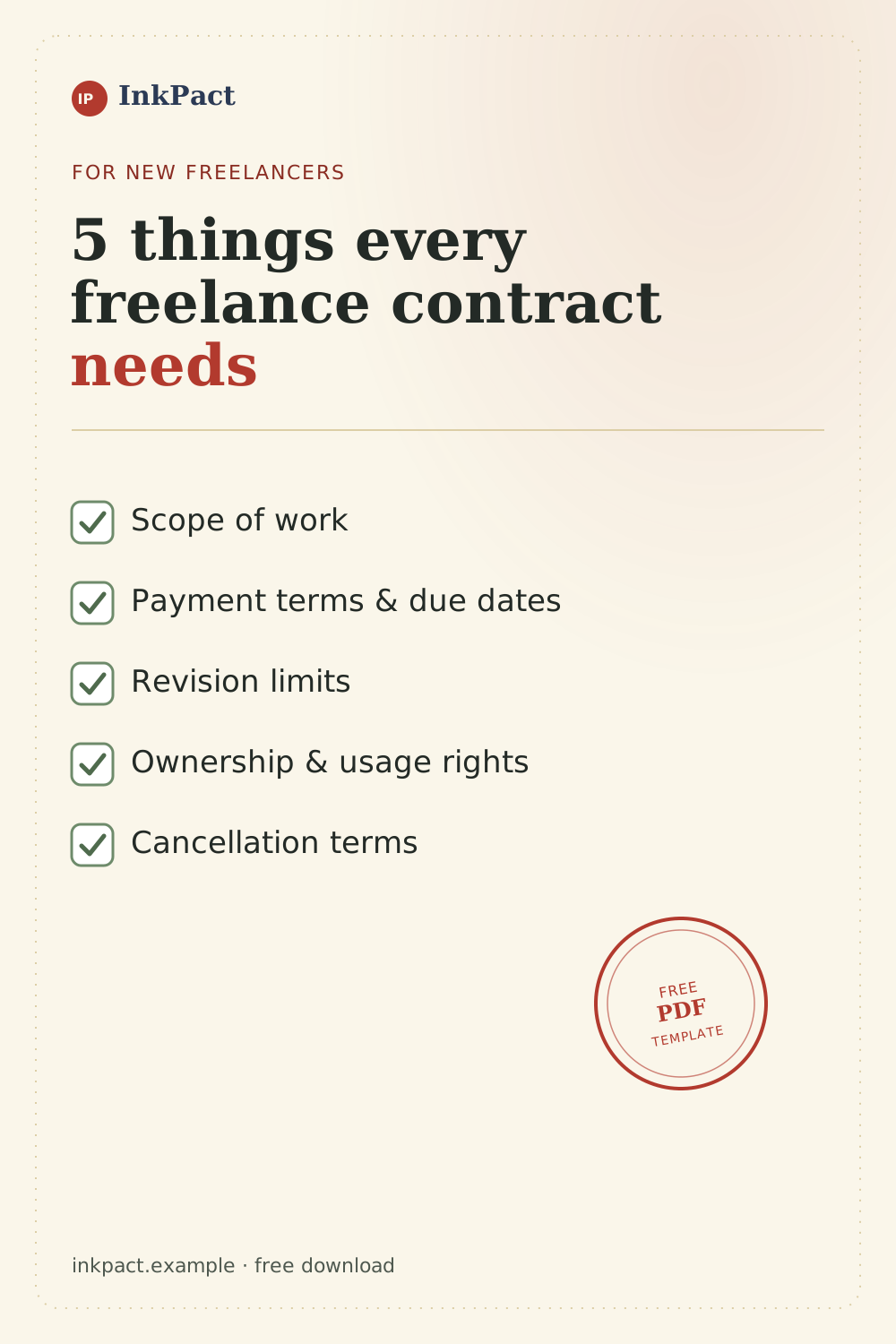
Save this checklist for later, or skip straight to the ready-made template.
Get the free templateA sixth clause worth adding: signatures
It sounds obvious, but a contract isn't a contract until both sides sign and date it. A simple line for each name, signature, and date is enough — no notary required for most freelance work.
If you'd rather not build this from scratch, the free freelance contract template PDF already has all five clauses (plus signatures) laid out and ready to fill in. You can also read more on why a simple written contract beats a verbal agreement, or check how a contract differs from an invoice if you're not sure which one you need first.